Email deliverability is important because even the most compelling message is worthless if it never reaches your recipient’s inbox. Essentially, email deliverability measures how successfully your emails bypass spam filters and land where they belong—in the inbox, ready to be read. A strong deliverability rate not only ensures your carefully crafted content reaches its intended audience but also positively impacts your sender reputation.
Sender reputation and authentication protocols
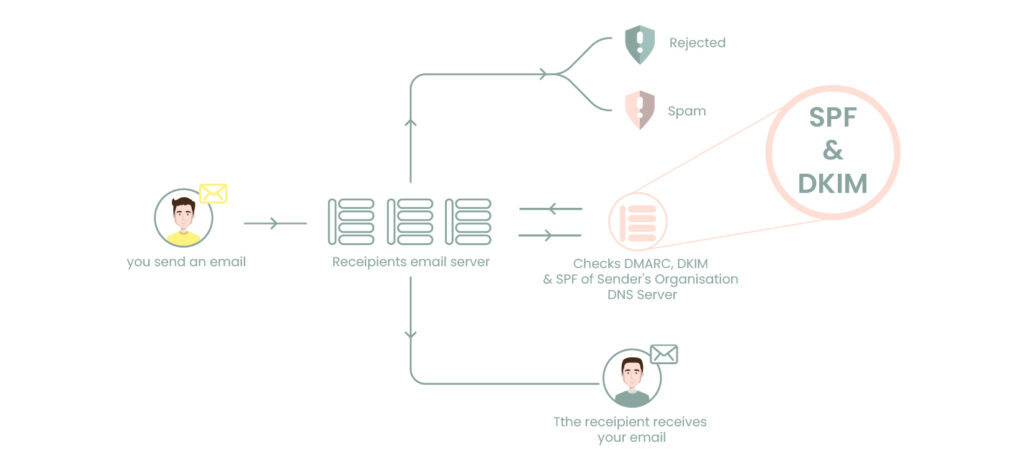
Your sender reputation is built on a few technical standards designed to verify your emails as authentic and untampered with. These include:
- SPF (Sender Policy Framework): Defines which servers are authorized to send emails on behalf of your domain.
- DKIM (DomainKeys Identified Mail): Ensures your emails haven’t been modified during transit by using a cryptographic signature.
- DMARC (Domain-based Message Authentication, Reporting, and Conformance): Combines SPF and DKIM to protect your domain from fraudulent email spoofing.
Yet, according to the latest research from Influencer Marketing Hub, only 79.6% of legitimate emails actually reach their final destination. That means, on average, 3 out of 20 emails never arrive, which can result in significant consequences. Users could lose access to accounts and end up abandoning your platform all together. Customers might miss important updates and use your cometitors instead. Prospects might forget about your brand entirely, impacting your retention and conversion rates.
If you can afford not to worry about email deliverability, you’re in the minority. Most content specialists understand that even a small boost in delivery rates can lead to significant improvements in engagement and revenue. And if no one is receiving them, why are you writing them in the first place?
Causes of email deliverability issues
Several factors can negatively impact your email deliverability, including:
- Spam complaints: A high number of recipients marking your emails as spam can damage your sender reputation.
- Email content: Poorly structured or overly promotional emails can trigger spam filters.
- Sending volume: Large spikes in email volume can raise red flags for email providers.
- Infrastructure issues: Using unverified or low-reputation email servers can lead to deliverability problems.
Even if you’ve thoroughly tested your campaigns before sending them, you may still wonder whether your emails were successfully delivered. While it’s impossible to determine with certainty whether an email landed in an inbox rather than a spam folder, modern email deliverability monitoring has become an industry standard.
How DKIM protects your emails
Back to this confusing acronym. To break it down DKIM is a security measure that allows an organization to verify that an email it sent has not been altered. It does this by digitally signing outgoing messages, allowing recipients to authenticate the sender. Here’s how it works:
- Creating the Digital Signature: The sender’s email system selects specific email components—such as the “from” address, subject line, and body—to be included in a digital signature. These fields must remain unchanged during delivery for verification to succeed.
- Hashing and Encryption: The sender’s system generates a unique hash from the selected fields and encrypts it using a private key that only the sender controls.
- Verification by the Recipient: Upon receiving the email, the recipient’s mail server retrieves the sender’s public key from their DNS records. The server decrypts the signature, generates its own hash from the email fields, and compares the two. If they match, the email is confirmed as legitimate and untampered with.
This process ensures email authenticity and integrity while safeguarding sensitive information from exposure.
Good email deliverability rates
Determining a good email deliverability rate isn’t always straightforward. While industry standards suggest aiming for 85% to 95%, each business operates under different circumstances. Factors like list quality, industry standards, and email engagement all play a role.
To optimize your email strategy make sure to research your industry’s benchmarks to understand how competitors perform. Analyze your inbox for placement rate and engagement metrics. And try to set an internal deliverability benchmark to work towards continuing your own improvement.
Monitoring email deliverability
One way to monitor email deliverability is through tracking pixels tiny, transparent images embedded in emails. These pixels are invisible to users and do not affect deliverability, but they allow email platforms to track when an email is opened or when links are clicked.
Tracking pixels provide insights into:
- Whether an email was opened
- Which links were clicked
- The type of device and operating system used
- The email client (e.g., Gmail, Outlook) used by the recipient
Unlike cookies on websites, tracking pixels are not yet regulated by specific laws, meaning they can be freely used in marketing campaigns. However, data collection via tracking pixels remains a controversial topic, particularly under regulations like the General Data Protection Regulation (GDPR) in the EU.
GDPR compliance
On May 25, 2018, the General Data Protection Regulation (GDPR) took effect in the EU, significantly changing the rules of email marketing. While initial fears of disruption proved exaggerated, compliance is crucial to avoid steep fines for data privacy violations. When using tracking pixels and email analytics:
- Ensure clear consent is obtained from users before collecting tracking data.
- Store and process user data securely in compliance with GDPR guidelines.
- Be transparent about how you use tracking data to improve email engagement.
Marketing vs. transactional email deliverability rates
Marketing emails typically have lower engagement rates, with open rates averaging 20–25 percent. If you are lucky enough to have an open rate higher than 30%, that is considered a strong performance. Even a 5–10% boost from email warm-up services can be impactful.
Transactional emails are critical messages such as password resets and purchase confirmations. The deliverability rate heavily depends on the email service provider you use. Testing different email services can help ensure higher reliability, especially as Gmail now fully enforces its updated sender requirements in 2025.
Best practices for improving email deliverability
In industries where email campaigns are a key part of success, maintaining a high deliverability rate should be a top priority. Here’s how to optimize your email strategy:
- Maintain a clean mailing list: Regularly remove inactive or invalid email addresses to prevent high bounce rates and spam complaints.
- Authenticate your emails: Implement SPF, DKIM, and DMARC to enhance security and prevent email spoofing. Gmail now requires proper authentication to avoid deliverability issues.
- Monitor sending frequency: Sending emails at a steady, predictable pace helps establish consistency and reliability with email service providers.
- Optimize email content: Avoid spammy subject lines, ensure proper formatting, and provide valuable content to encourage engagement.
- Monitor deliverability metrics: Track bounce rates, spam complaints, and open rates to identify potential issues before they impact your sender reputation.
- Enable one-click unsubscribe: Required by Gmail’s updated 2025 standards for all marketing emails to improve transparency and reduce complaints.
- Use TLS encryption: Gmail now requires Transport Layer Security (TLS) for secure email transmission. Confirm that TLS is enabled on all outgoing emails.
- Align DNS records: Gmail requires alignment between forward and reverse DNS to verify the legitimacy of sending servers.
Don’t waste your time writing emails that people not only won’t read, but can’t read because they never reached them. By prioritizing email deliverability, you’re not just avoiding spam folders—you’re building trust, maintaining a positive brand reputation, and ensuring that every email you send contributes to your overall marketing success. When your emails consistently reach inboxes, your audience remains engaged, informed, and excited to hear from you.
How Revonish Content Lab can help you and your business
At Revonish Content Lab, we understand that email marketing is only effective if your emails actually reach your audience. That’s why we specialize in white-label email content and strategy that helps agencies, businesses, and marketing teams improve email deliverability, engagement, and conversions—all under your brand name.
From crafting compelling, inbox-friendly email copy to ensuring best practices in authentication and content structuring, we create high-performing emails that bypass spam filters and land in front of the right people. Whether you need email nurture sequences, transactional email templates, or full campaign strategies, we help you optimize for deliverability while keeping messaging clear, engaging, and on-brand.